


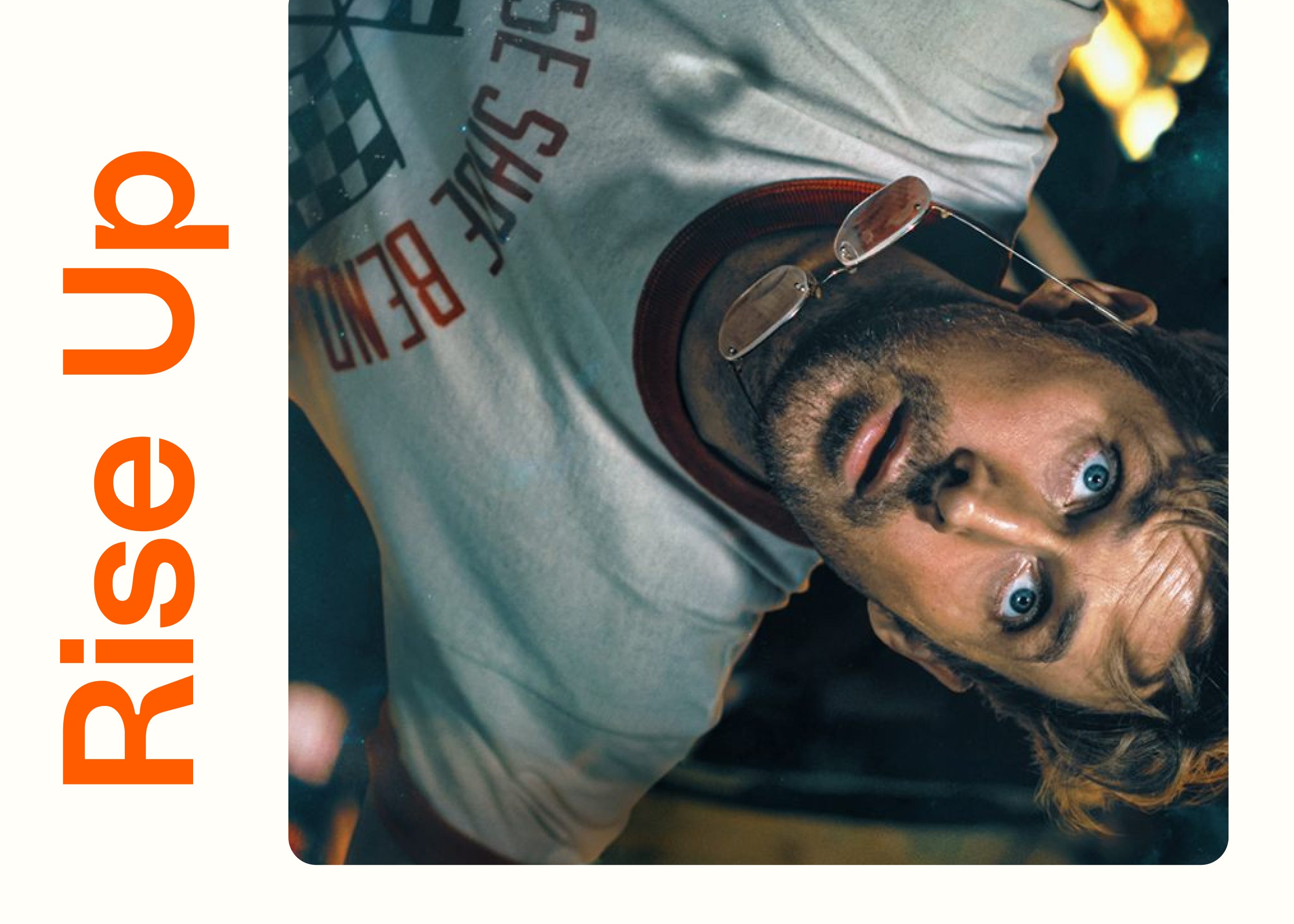
Project Hail Mary is a film about a mission to save Earth. The spacecraft is the Hail Mary. On board is Ryland Grace, an American middle school science teacher played by Ryan Gosling.
Hail Mary, full of Grace.
And if you’ve seen it, you know the naming isn’t a joke. Not since Steven Spielberg’s E.T. will you try this hard not to cry. The film delivers wonder, joy, connection.
The happy tears’ll getcha.
Twelve light years from home, Grace wakes from a coma. His crewmates are dead in their cryotubes. He eats, alone. The computer answers when spoken to. The stars belong to a system he does not recognise. He is the loneliest character mainstream American cinema has put on the screen in a decade.
Then another ship appears.
A tunnel grows from its hull toward the Hail Mary. Grace walks through it in his EVA suit. At the halfway point, a wall of clear xenonite. On the other side: Rocky. A lump of granite the size of a Labrador, five limbs, no face.
They look at each other.
Grace raises his hand and places it palm-first against the hot glass. He holds it there.
Rocky raises one of his limbs. He places his three-fingered hand directly opposite Grace’s palm.
In E.T., the alien’s glowing fingertip touched Elliott’s forehead at goodbye. Grace and Rocky’s hands meet at hello.
The shot holds for longer than is comfortable.
Two beings that share nothing at all. The atmosphere on Rocky’s side would kill Grace in seconds. And yet there they are. Lost in the extremities of outer space, somehow finding each other.
The audience needs it, and feels it, as much as the two characters. Grace’s reaction says it all:
It was the loneliest I’d ever been, and then it wasn’t, anymore.
A line like that, in a year like this?
No surprise, Project Hail Mary is catching a buzz. Some are calling it next year’s Best Picture frontrunner.
“It’s everything you could possibly want from a cinematic experience.” — Nerdist
Audiences love it. 95% on Rotten Tomatoes’ Popcornmeter, 112,000 videos posted to #projecthailmary. 400 million views of the first trailer in seven days — the most ever for an original film that isn’t a sequel or remake.
As for the grosses: $668 million at the box office, over-running Amazon’s own 45-day theatrical window. In every way, this is a hit for the studio.
Who is the studio?
Amazon MGM.
It seems normal now, but take a beat. MGM — an icon of Hollywood, the famous lion under strips of gold film, three loud roars, Ars Gratia Artis, art for art’s sake — was bought by a Seattle e-commerce company that sells you bin bags and HDMI cables.
When the deal was announced, the worry was that Amazon would starve MGM of original ideas, milking the back catalogue for one-click buys.
MGM signed the rights to Project Hail Mary before the takeover, so Hail Mary doesn’t acquit Amazon yet. But it surely offers what the film offers.
Hope.
The script’s premise is prescient: The planet is losing sunlight to a fictional microbe called astrophage that feeds on the sun’s radiation. Hollywood, too, has its own astrophage.
Obviously, Netflix, Apple, and Disney. They eat the need to ever sit in the dark with strangers and watch a film at the cinema ever again.
But the bigger menace for movie production is the economics of short-form video. The industry waves it off as a different beast, but it is the beast. We’re addicted. A clip. A swipe. A clip. A swipe. A clip a clip a clip.
At a run time of two hours thirty-six minutes, most of Hail Mary‘s audience will end up consuming the film as clips, free, on social, at a scale far bigger than the number who can sit still and keep off their phones long enough to watch the film itself.
Reminder: Meta clears $668 million every 29 hours. YouTube every four days. TikTok every seven. And they take zero creative risks. Production budget = $0.
Making a Hail Mary is lightning in a bottle. Six years and $200 million trying to catch it, and mostly it doesn’t come. Begging a blindingly obvious question: Why is a company as nakedly efficient as Amazon even bothering?
For art’s sake?
Obviously not.
Amazon does have an empire to protect. After all, Prime is one of the planet’s largest recurring revenue streams and AWS runs nearly a third of all the cloud computing on Earth.
When your business is warehouses, blinking servers, logistics, and infrastructure, you’re boring. Another brown box thrown up against your front door is fulfilment. But it’s not fulfilling. You can’t take your kids to go see an AWS Nitro System hypervisor.
So when Andy Jassy goes on Mad Money to face Jim Cramer about Q1, the supply chain, the AI race, he needs something that doesn’t send Jim to sleep. He needs a human face, Ryan Gosling’s, and a promise that the future is bright.
To stay essential, Amazon needs to nurture wonder. One thing they can’t engineer.
It’s helpful then that Hail Mary‘s makers have focussed on magic, making sure every frame is covered in human fingerprints.
Rocky is a puppet built by Neal Scanlan’s shop with servomotor fingers, brought to life on set by James Ortiz. His voice is an ocarina, and a jug of water that directors Phil Lord and Christopher Miller blew across, tuning by ear. Daniel Pemberton’s score: wood, metal, stomping, clapping.
Fans are sharing crochet patterns and 3D print files. Craft your own Rocky.
This month, Bumble killed the swipe. In its place, an AI assistant who interviews you, then recommends who to meet. It would be easy to read Hail Mary as the counter-punch. A plea for hands touching through glass, not fingers swiping on screens.
Andy Weir, who wrote the novel, is the obvious person to ask if that’s the read. Parents divorced when he was eight. As a kid he spent long stretches alone then grew up to be a software engineer who likes working out his own orbital mechanics, just for fun.
You’d think his answer would reflect the fears, and scars, of a loner in the age of the algorithm. But Weir won’t be drawn there. His answer is bigger.
“I don’t really like sci-fi where it’s bleak and dystopian. I like the optimistic stuff […] We are an awesome and amazing people as a species.”
That’s what art can do. Hold the mirror up at an angle that shows the version of us worth being. Ars Gratia Artis — maybe not art for art’s sake, but Amazon and MGM might just about agree it’s art for our sake.
If Amazon gives the lion a new roar, and Jassy gets to take his kids to a premiere instead of a hypervisor, then we get movie moments that hold us tight.
One particular moment holds us tightest of all:
Grace teaches Rocky thumbs up. Good. Yes. Affirmative. With three fingers, Rocky’s version comes out upside down.
Later, Grace tells Rocky something hard to admit. Grace doesn’t have the words to make it okay. He tries a thumbs-up. It doesn’t fit the moment. So he flips his hands over. Rocky’s way around.
Thumbs down.
I know what’s happening, I’m not pretending, and whatever happens is okay because we are here, together.
A simple childlike gesture, flipped the wrong way, punches your throat. If you’ve held it back this far, this is where you blub.
In life, we all get lost in our own atmosphere sometimes. If you’re lucky, really lucky, someone on the other side has their heart pressed against the glass to bring you home. If you’re luckier still, you get to press yours right back.
I’ll leave the last words to Rocky:
Amaze. Amaze. Amaze.
Market Moves
Iran threat sends oil prices higher as deadline looms | Bloomberg
U.S. wholesale inflation hits 6% in April | CNBC
IMF upgrades UK growth forecast but warns risks remain | BBC
Brand Beat
Amazon beats Q1 forecasts and credits ‘Project Hail Mary’ amid AI race | Deadline
Bumble ditches its signature swipe feature and goes all-in on AI | Let’s Data Science
Peak TV is behind us | The Guardian
Gen Z film distributor uses influencer events to bring peers back to cinemas | Fast Company
Amazon and YouTube are selling TV operating systems, not just ad inventory | Digiday
KitKat turns its packaging into a signal-blocking pouch for your phone | Dezeen
Timothée Chalamet stars as street soccer fanatic in Adidas World Cup ad | The Wall Street Journal
Why marketers can no longer afford to ignore Reddit | The Drum
Publicis strikes $2.2 billion deal to acquire data firm LiveRamp | Adweek
How Claire’s is winning over tweens in the YouTube era | The Wall Street Journal
Apple’s marketing VP Tor Myhren reflects on a decade shaping the brand | Fast Company
Why ‘creative’ should be an adjective again, not a job title | The Drum
Very’s chief customer officer departs the retail brand | Marketing Week
Hinge’s new campaign honours the almost-moments that lead to Gen Z love | Adweek
How to redesign your marketing organisation for the agentic AI age | Harvard Business Review
Octopus CMO Rebecca Dibb-Simkin ignored warnings to join an energy startup | City A.M.
Graza’s new potato chips are surprisingly good, and worth your attention | Tasting Table
Lululemon hits back at founder Chip Wilson, calling him ‘misguided’ and ‘outdated’ | CNBC
Starting Up
How Marisa Poster built Perfect Ted into a $67m matcha brand | Forbes
Multiverse raises $70m, boosting valuation of Euan Blair’s apprenticeship startup | Sifted
Poppi founder Allison Ellsworth opens up about money and building a brand | The Wall Street Journal
15 European hardware startups to watch in 2026 | Sifted
Nectar Social raises $30M Series A to build a marketing operating system | TechCrunch
Tech Tidbits
Why AI feels like both a familiar machine and pure magic | The Wall Street Journal
The AI job apocalypse narrative is completely wrong | a16z
Elon Musk loses landmark lawsuit against OpenAI | Wired
Is Mark Zuckerberg running Meta into the ground? | The New York Times
Why data centers might actually benefit your local community | Vox
Venture Vibes
James Murdoch in talks to acquire major parts of Vox Media | The New York Times
Everlane is being acquired by Shein | Puck
eBay turns down $55.5bn takeover bid from GameStop | BBC
Activist investor pressures Whitbread to put itself up for sale | The Wall Street Journal
SpaceX selects Nasdaq for its mid-June IPO listing | The Information
OnlyFans falls from $8bn to $3bn as pandemic-era empire crumbles | European Business Magazine
Design Driven
How Wallpaper threw its epic NYCxDesign Week party with Hello Human | Wallpaper
BMW’s design chief Max Missoni on where the brand is headed | Cool Hunting
Happiness
The case for bringing back the humble postcard | Wallpaper
Why AI’s rise makes reconnecting with our humanity more urgent than ever | Vox
People are going under the knife to look more AI-generated | Futurism
If you like what you’ve read, do subscribe and share ♾️
Stay gold 🙏🏻